
- The User OOBE Broker is a Windows process responsible for the initial setup experience when you first start a new computer, but it can sometimes cause high CPU usage when it keeps running unnecessarily due to Windows updates.
- This process can be mistakenly concerning to users as it consumes a lot of the computer's power, leading many to think it might be malware. However, it is not a virus, and users can check its legitimacy by confirming its file location in the system.
- Disabling the User OOBE Broker is safe and can solve the high CPU usage problem by changing settings to stop the "Windows Welcome Experience," using the Registry Editor, or creating a new user profile if necessary.
It usually starts with a sound. You are sitting at your desk, working on a spreadsheet or perhaps in the middle of a gaming session, when suddenly your computer fans spin up to maximum speed. Your system starts to stutter, the mouse cursor lags, and everything feels like it is moving through molasses.
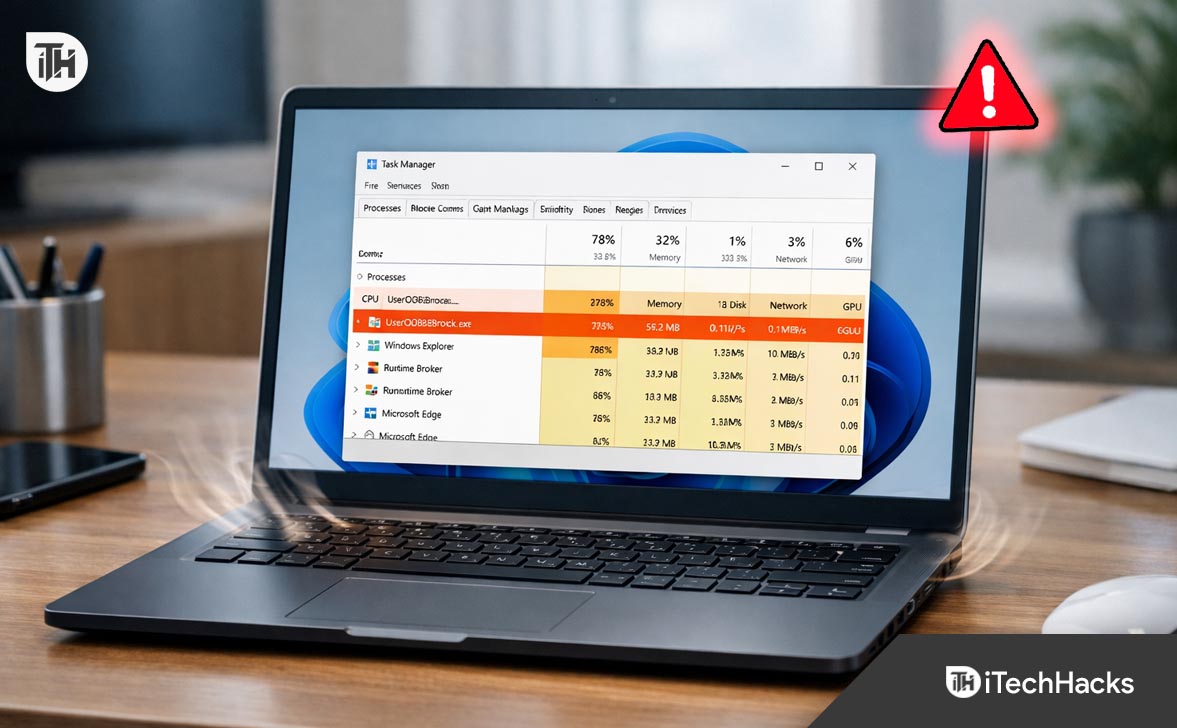
You hit Ctrl + Shift + Esc to open the Task Manager, desperate to find the culprit. Sorting by CPU usage, you expect to see a heavy application like Chrome or a video editor at the top. Instead, you find a process you have likely never heard of: User OOBE Broker (or UserOOBEBroker.exe).
It sits there, consuming 30%, 50%, or even more of your processor’s power. You try to end it, but it keeps coming back. Naturally, panic sets in. Is this a virus? Is my computer compromised? Why is a “Broker” running on my PC?
If you are dealing with the OOBE Broker draining your resources, you are not alone. This is a common Windows quirk that frustrates thousands of users every year. The good news is that it is not malware, and it is relatively easy to fix once you understand what it is trying to do.
This comprehensive guide will explain exactly what the User OOBE Broker is, why it is misbehaving on your system, and provide you with five step-by-step methods to disable it permanently in 2026.
What Exactly Is User OOBE Broker?
To understand this mysterious process, we first have to decode the acronym OOBE. It stands for “Out of Box Experience.”
In the world of Microsoft and software development, the “Out of Box Experience” refers to the very first interactions a user has with a product. When you buy a brand-new laptop, take it out of the box, and turn it on for the first time, you are greeted by a friendly, full-screen setup wizard. A voice (Cortana) might talk to you, asking you to select your region, connect to Wi-Fi, sign in with a Microsoft Account, and choose your privacy settings.
That entire setup sequence is the OOBE.
The User OOBE Broker (UserOOBEBroker.exe) is the background worker process responsible for managing this experience. It pre-loads the slides, handles the transitions between setup screens, and ensures your choices are saved to the registry.
Why Is It Running on a PC That Is Already Set Up?
This is the million-dollar question. If you bought your PC three years ago and set it up back then, why is the “Out of Box” broker running today?
The answer lies in how Microsoft handles Windows updates. In Windows 10 and Windows 11, Microsoft introduced a feature called the “Welcome Experience.”
You have likely seen this before: you restart your computer after a major update, and instead of going to your desktop, you see a full-screen message saying, “Let’s finish setting up your device” or “Get even more out of Windows.” It then prompts you to set up Windows Hello, link your phone, or buy a subscription to Microsoft 365.
To Windows, this post-update screen is technically a “mini-OOBE.” Therefore, the operating system launches the User OOBE Broker process to prepare and display these screens.
The Problem:
Sometimes, this process glitches. It gets stuck in a loop trying to launch the Welcome screen but failing, or it doesn’t close properly after you have clicked “Skip.” The result is a “zombie” process that runs endlessly in the background, eating up CPU cycles and memory as it futilely tries to complete a task that is already finished.
Is User OOBE Broker a Virus?
Before you start disabling things, it is crucial to verify that the file running on your PC is the legitimate Windows component and not a malicious imposter.
While UserOOBEBroker.exe is a standard Windows file; malware creators often name their viruses after legitimate processes to hide in plain sight.
How to Verify the File:
- Open Task Manager (
Ctrl + Shift + Esc). - Locate User OOBE Broker in the list.
- Right-click on the process and select Open file location.
The Verdict:
- Safe: If the folder that opens is
C:\Windows\System32, the file is legitimate. You can proceed with the fixes below safely. - Unsafe: If the folder opens to your Downloads, AppData, or a random folder in
C:\Temp, you are likely dealing with malware disguised as the OOBE Broker. In this case, run a full scan with your antivirus software immediately.
Is It Safe to Disable It?
Yes, absolutely.
Disabling the User OOBE Broker will not harm your computer. It is not a critical system kernel process (like ntoskrnl.exe) or a driver. It is strictly a user-interface helper for setup screens.
By disabling it, you are simply telling Windows, “I don’t need help setting up my device anymore; please stop showing me the Welcome Wizard.” Your apps, games, and internet connection will continue to work perfectly fine.
How to Disable User OOBE Broker (5 Methods)
We have ranked these methods from easiest to most advanced. Start with Method 1, as it solves the problem for 90% of users.
Method 1: Turn Off “Windows Welcome Experience” (The Gold Standard)
The most effective fix is to simply ask Windows nicely to stop running the process. You do this by disabling the specific notification settings that trigger the OOBE Broker.
For Windows 11 Users:
- Open the Settings menu by pressing the Windows Key + I.
- In the left sidebar, click on System.
- Click on Notifications.
- Scroll down to the bottom of the list. You will see a dropdown arrow labeled Additional settings. Click it to expand.
- Uncheck the box that says: “Show the Windows welcome experience after updates and when signed in to show what’s new and suggested.”
- Uncheck the box that says: “Suggest ways to get the most out of Windows and finish setting up this device.”
- Restart your computer.
For Windows 10 Users:
- Open Settings > System.
- Click on Notifications & actions in the left pane.
- Uncheck the box that says: “Show me the Windows welcome experience after updates and occasionally when I sign in to highlight what’s new and suggested.”
- Uncheck the box that says: “Suggest ways I can finish setting up my device to get the most out of Windows.”
- Restart your computer.
By unchecking these boxes, you remove the trigger. Windows will no longer attempt to load the Welcome Screen, so it has no reason to launch the OOBE Broker process.
Method 2: The Registry Edit (For Stubborn Cases)
If the Settings method didn’t work, or if the options were grayed out (common on Enterprise editions of Windows), you can force the change using the Registry Editor.
Warning: The Registry is the nervous system of Windows. Follow these steps exactly. Do not delete keys randomly.
- Press Windows Key + R to open the Run dialog.
- Type
regeditand press Enter. Click Yes if prompted by User Account Control. - Navigate through the folders on the left to reach this path:
HKEY_CURRENT_USER\Software\Microsoft\Windows\CurrentVersion\ContentDeliveryManager - On the right side, look for these specific entries:
SubscribedContent-310093EnabledSubscribedContent-338387EnabledSubscribedContent-338388EnabledSubscribedContent-338389Enabled
- Double-click on each of them and change the Value data to 0. (Note: Setting the value to 0 means “Disabled.”)
- If you don’t see these keys, you can skip them, but usually,
SubscribedContent-310093Enabledis the main culprit for the Welcome Experience. - Close the Registry Editor and reboot your PC.
Method 3: Disable via Task Manager (The Temporary Band-Aid)
If you are in the middle of a meeting or a game and just need the lag to stop right now, you can kill the process manually. Be aware that this is not a permanent fix; the process will likely return the next time you restart or update Windows.
- Press Ctrl + Shift + Esc to open Task Manager.
- Go to the Details tab. (In Windows 11, this is the icon that looks like lines in a list on the sidebar).
- Scroll down until you find
UserOOBEBroker.exe. - Right-click on it and select End Task.
- A warning will pop up asking if you are sure. Click End Process.
This should immediately drop your CPU usage back to normal levels.
Method 4: Create a New User Profile (The Nuclear Option)
If the OOBE Broker persists despite disabling the settings and editing the registry, your current user profile might be corrupted.
Sometimes, the file that tracks whether you have completed the setup gets damaged. Windows looks at the file, sees “Setup Incomplete,” runs the Broker, fails to read the file, crashes, and tries again instantly—creating an infinite loop.
Testing a new profile confirms this:
- Go to Settings > Accounts > Other users.
- Click Add account.
- Select “I don’t have this person’s sign-in information.”
- Select “Add a user without a Microsoft account.”
- Give the account a name like “Test” and click Next.
- Sign out of your current account and sign in to “Test.”
The Test: Use the “Test” account for 10-15 minutes. Open Task Manager. If UserOOBEBroker.exe is not consuming high CPU on this new account, your original profile is corrupted. You may need to move your files (Documents, Pictures, Desktop) to the new account and delete the old one.
Method 5: Check Background App Permissions (Windows 10 Only)
In older versions of Windows 10, the OOBE Broker was categorized as a background app. You could sometimes disable it via the Privacy settings. Note that Windows 11 has largely removed this specific global toggle, but it is worth checking if you are on Windows 10.
- Go to Settings > Privacy.
- Scroll down on the left to Background apps.
- Look for any app related to “Settings,” “Windows Welcome,” or “Microsoft Content.”
- Toggle them Off.
Conclusion
The User OOBE Broker is a classic example of a helpful feature gone wrong. What was designed to be a friendly “Welcome Back” screen often turns into a resource-hogging nuisance.
Fortunately, you don’t have to live with a slow PC. By recognizing that the OOBE Broker is safe to disable and following the steps to turn off the “Windows Welcome Experience” in your settings, you can silence this process for good.
In 2026, keeping your PC optimized is about managing these background distractions. Take five minutes today to adjust your notification settings, and you will likely save yourself hours of fan noise and frustration in the future.
ALSO READ:
- Download Windows 10 Full Free (ISO 32-64 Bit) 2023: Install Windows 10
- How to Fix Windows 10 Update Stuck and Failed
- How to Get a Printer Online on Windows 10 (Offline to Online)
- Fix “Failed To Enumerate Objects In The Container” Windows 10/11
- How to Fix Error 740 While Adding Printer on Windows 10/11
- Windows 11 Not Showing Up In My Windows 10 Update Settings
- Fix Windows 11 Multi Monitor Taskbar Not Working Properly
- How To Reset Lost Windows 10 Password Without Logging In