
- Most iOS 26 alarm not going off issues are caused by new Focus mode restrictions, silent alarm tones, or migrated settings bugs after the update. Rechecking sound settings, disabling Focus interference, and recreating alarms usually resolves the problem.
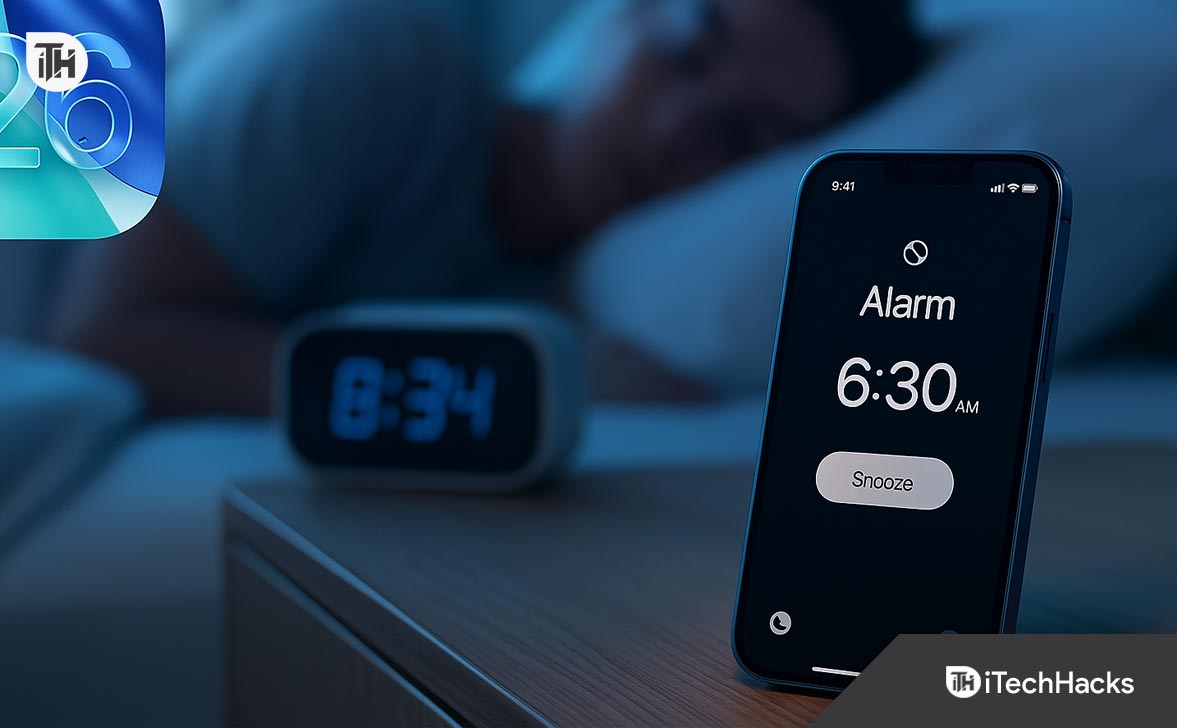
After updating to iOS 26, many iPhone users have started experiencing an unexpected problem: alarms not going off reliably. Even when multiple alarms are set, they may fail to ring, vibrate without sound, trigger late, or get skipped entirely.
iOS 26, released in late 2025, introduced significant changes to system notifications, Focus mode behavior, and the internal scheduling engine that manages alarms. These upgrades are designed to improve customization and reduce notification overload, but they have also created new inconsistencies. The most common issues occur where alarms overlap with Focus profiles, Sleep mode automation, revised Do Not Disturb rules, and the updated volume and output routing controls introduced in iOS 26.
This comprehensive guide explains why your iOS 26 alarm isn’t working and provides step-by-step troubleshooting methods to fix the problem permanently.
Understanding the iOS 26 Alarm Issue After Launch
iOS 26 has been freshly released
Apple rolled out iOS 26 globally in mid-September 2025. It introduced the new Liquid Glass UI, enhanced Apple Intelligence, smarter Focus automation, and redesigned Clock app settings.
However, as with many early releases, initial bugs have surfaced — especially around alarm scheduling, Focus conflicts, and notification silencing.
Why It Matters
An unreliable alarm can disrupt your schedule — from missed flights to late work meetings. Because iOS 26 modifies background notification handling, even small misconfigurations can silence alarms unintentionally.
Common Reasons Why iOS 26 Alarm Is Not Going Off
1. Focus Mode Interference
iOS 26 has reworked Focus automation. If your Focus profile (e.g. Sleep, Work, or Do Not Disturb) doesn’t allow the Clock app, alarms may be suppressed.
2. Silent or Low Alarm Volume
The Ringer & Alerts volume may have been reset or linked to volume buttons after the update, lowering the alarm’s sound level.
3. Alarm Sound Set to “None.”
During migration to iOS 26, some users found their alarm sound defaulted to “None” or a silent tone.
4. Sleep Schedule Overlap
The Health app’s Sleep Schedule might override manual alarms, leading to conflicts or muted alarms.
5. Bugs in iOS 26 Initial Build
New releases often include minor glitches affecting core apps. The Clock app may not trigger alarms properly until patches (e.g., iOS 26.1) are installed.
6. Third-Party App Conflicts
Apps like Alarmy or Sleep Cycle may interfere with Apple’s Clock app permissions or sound playback.
7. Battery Optimization & Background Limits
Aggressive power management can restrict the Clock app from running at wake time.
Fix: iOS 26 Alarm Not Going Off
Use these methods in order. After each change, set a test alarm 2–3 minutes ahead to verify the fix before moving on.
Verify Core Sound & Volume Settings (prevents silent alarms)
On iOS 26, alarm reliability still depends on the Ringtone & Alerts volume and the selected tone.
-
Go to Settings → Sounds & Haptics
-
Raise Ringtone and Alerts to at least 70–80%.
-
Turn Change with Buttons OFF so accidental button presses don’t lower alarm volume at night.
-
-
Open Clock → Alarm → Edit (tap your alarm) → Sound
-
Pick a built-in, high-gain tone (e.g., Radar, Apex, Presto). Avoid None and very soft tones.
-
Tap Save.
-
Quick test: Set a trial alarm for 2 minutes ahead. Confirm you hear a loud ring.
Eliminate Focus/Do Not Disturb conflicts (top cause on iOS 26)
Newer Focus behaviors in iOS 26 can silence alerts from apps not explicitly allowed.
-
Settings → Focus
-
Open Sleep, Do Not Disturb, and any custom Focus you use at night.
-
Under Allowed Notifications → Apps, tap Add App → add Clock.
-
If you use Schedule/Automation for a Focus, ensure alarms fall outside suppressed windows or that Clock is allowed.
-
-
If you use Health Sleep Schedule:
-
Health → Sleep → Full Schedule & Options
-
Ensure Wake Up Alarm = On, set the correct time, choose a loud Sound, and enable Snooze if desired.
-
Pro tip: If you don’t need Focus overnight, toggle it Off from Control Center before bed to guarantee that alarms ring.
Recreate alarms to clear corrupted entries
Major updates (like iOS 26) can leave behind stale alarm objects.
- Clock → Alarm → swipe left → Delete each problematic alarm.
- Tap + to recreate from scratch.
- Set Time, Repeat, Label, Sound, Snooze → Save.
Quick test: Create a one-time alarm for the next 2–3 minutes.
Stop Bluetooth and audio-routing surprises
If your phone routes audio to sleeping AirPods, an idle Bluetooth speaker, CarPlay, or a nearby HomePod, you might not hear the alarm.
- Before sleeping, open Control Center → long-press Now Playing → tap the AirPlay icon and ensure output is iPhone.
- Or temporarily disable Bluetooth overnight: Settings → Bluetooth → Off (optional).
- If you charge near a HomePod, test that alarms still sound on iPhone.
Quick test: With headphones/speakers disconnected, trigger a short test alarm.
Disable “Attention Aware” lowering volume
With Face ID, Attention Aware Features can reduce the alarm volume once the phone detects you looking, making it seem like the alarm didn’t ring.
-
Settings → Face ID & Attention → Attention Aware Features → toggle Off (you can re-enable later).
Quick test: Trigger a test alarm while looking at the phone; confirm the volume stays consistent.
Audit Shortcuts & Automations that change volume or Focus
Why this matters: Many “bedtime” automations lower volume, switch Focus, or silence alerts.
-
Shortcuts → Automation
-
Review Personal Automations for actions like Set Volume, Set Focus, Set Bluetooth, or Open App → Clock behaviors.
-
Disable or delete anything that reduces alert volume or engages restrictive Focus profiles near wake time.
-
Quick test: After disabling, run a test alarm.
Refresh Background App Refresh & Siri settings for Clock
While alarms fire at the system level, Background App Refresh and Siri integrations can influence reliability for some workflows.
- Settings → General → Background App Refresh → ensure it’s On (Wi-Fi or Wi-Fi & Cellular).
- Settings → Clock → Enable relevant toggles (e.g., Siri & Search if you use voice to set alarms).
Quick test: Set an alarm via Siri (“Set an alarm for two minutes from now.”) and confirm it rings.
Confirm Date/Time & Time Zone accuracy
Why this matters: Wrong time zone or clock drift can make alarms fire at unexpected times.
-
Settings → General → Date & Time
-
Turn Set Automatically On.
-
Verify correct Time Zone (especially after travel or DST changes).
-
Quick test: Ensure the system time matches a trusted clock, then run a test alarm.
Update to the latest iOS 26 sub-version
Why this matters: Day-one builds often have quirks; Apple typically issues fast follow-up fixes.
-
Settings → General → Software Update → install the latest iOS 26.x.
-
Reboot after updating.
Quick test: Recreate a fresh alarm and verify.
Remove third-party alarm/sleep apps (temporary A/B test)
Why this matters: Apps that manage sleep tracking, bedtime routines, or alarms (Alarmy, Sleep Cycle, Calm, etc.) can intercept audio or schedule competing alarms.
-
Long-press an app → Remove App → Delete App (you can reinstall later).
-
Restart the iPhone.
-
Use only Clock for a night and evaluate reliability.
Quick test: Night trial with only Apple’s Clock app active.
Close “always-on” audio apps before bed
White-noise, YouTube, Podcasts, or music apps running with “keep playing in background” can sometimes interfere with audible alerts on certain setups.
-
Swipe up to the App Switcher and close persistent audio apps.
-
In those apps, disable “play in background”/“auto-play” overnight settings.
Quick test: Set a short alarm with no other audio playing.
Rule out Low Power Mode & battery constraints
Alarms should ring in Low Power Mode, but extremely low battery can shut the device off before the alarm.
-
Settings → Battery → avoid letting battery fall below ~5% overnight.
-
If your battery is weak, charge while sleeping or replace the battery.
Quick test: Charge above 30% and retest.
Reset All Settings (safe, non-destructive repair)
If hidden preference files got corrupted during the iOS 26 upgrade, this resets system settings without deleting personal data.
-
Settings → General → Transfer or Reset iPhone → Reset → Reset All Settings
-
Authenticate and confirm.
-
Re-set your alarms and volume preferences afterward.
Quick test: Recreate a new alarm and verify.
Rebuild your Sleep Schedule (Health) from zero
Why this matters: A broken Sleep configuration can silently clash with manual alarms.
-
Health → Sleep → Full Schedule & Options
-
Delete all schedules.
-
Tap Add Schedule → set Bedtime, Wake Up, enable Alarm, pick a loud tone, and Save.
-
-
In Settings → Focus → Sleep, confirm Clock is an Allowed App.
Use the Sleep wake-up alarm the next morning.
Clean reinstall of iOS (only if the problem survives everything else)
Rare, deep software faults sometimes need a clean image.
- Back up (iCloud or computer).
- On a Mac, open Finder (or iTunes on Windows) → connect iPhone via cable.
- Choose your device → Restore iPhone (erases and reinstalls iOS 26).
- Restore from backup → set up an alarm and test before reinstalling third-party apps.
FAQs
1. Why did my alarm stop working after iOS 26 update?
The iOS 26 release changed Focus and notification frameworks. Some alarms may be silenced due to new defaults or system bugs.
2. Does Silent Mode mute alarms on iOS 26?
No. iPhone alarms should ring regardless of Silent Mode, unless the sound is set to None or volume is too low.
3. Can Focus or Sleep mode block alarms?
Yes. If the Clock app isn’t allowed in Focus notifications, alarms may not sound.
4. Should I reset all settings?
Yes, if other methods fail. It’s safe and doesn’t erase data — only resets preferences.
5. Is Apple releasing a fix?
Yes. iOS 26.1 beta includes patches addressing alarm and Focus bugs. Updating is recommended.
Conclusion
With iOS 26 being newly launched, early bugs are expected — including the alarm not going off issue. Most problems stem from Focus mode restrictions, silent tones, or migrated settings.
By checking sound settings, disabling Focus interference, recreating alarms, and updating to iOS 26.1, you can restore reliable alarm functionality.
Stay updated, use Apple’s default tones, and monitor Focus modes to ensure your iOS 26 alarm rings exactly when needed.
ALSO READ:
- Apple CarPlay Not Working After iOS 26? Fix Connectivity, Crashes & Pairing Issues Fast
- How to Fix iOS 26 Stuck on Black Screen: Step-by-Step Guide
- How to Fix Wireless Charging Not Working on iOS 26 iPhone
- Apple Intelligence Not Working iOS 26? Step-by-Step Fix
- How to Turn Off or Disable iOS 26 Liquid Glass Design