
- Finding remote jobs can be tough, but using the right apps can help. Apps like LinkedIn and Indeed are good for professional jobs, while platforms like Upwork and Fiverr are great for freelance work. It's important to choose the right app based on the type of job and industry you prefer.
- Be careful with job listings, as some may not be genuine. Always check if the employer is real and make sure you're eligible to work in their location. When applying for jobs, tailor your résumé to match the job description and highlight your ability to work remotely.
Finding a legitimate remote job can be challenging when thousands of listings are spread across different websites and mobile apps. Some platforms specialize in full-time remote careers, while others focus on freelance projects, flexible schedules, startup jobs, or entry-level opportunities.
The best apps to find work-from-home jobs make the process easier by providing useful search filters, personalized recommendations, job alerts, employer information, and application-tracking features. However, no single platform is ideal for every job seeker. The right choice depends on your experience, location, preferred industry, and whether you want permanent employment or freelance work.
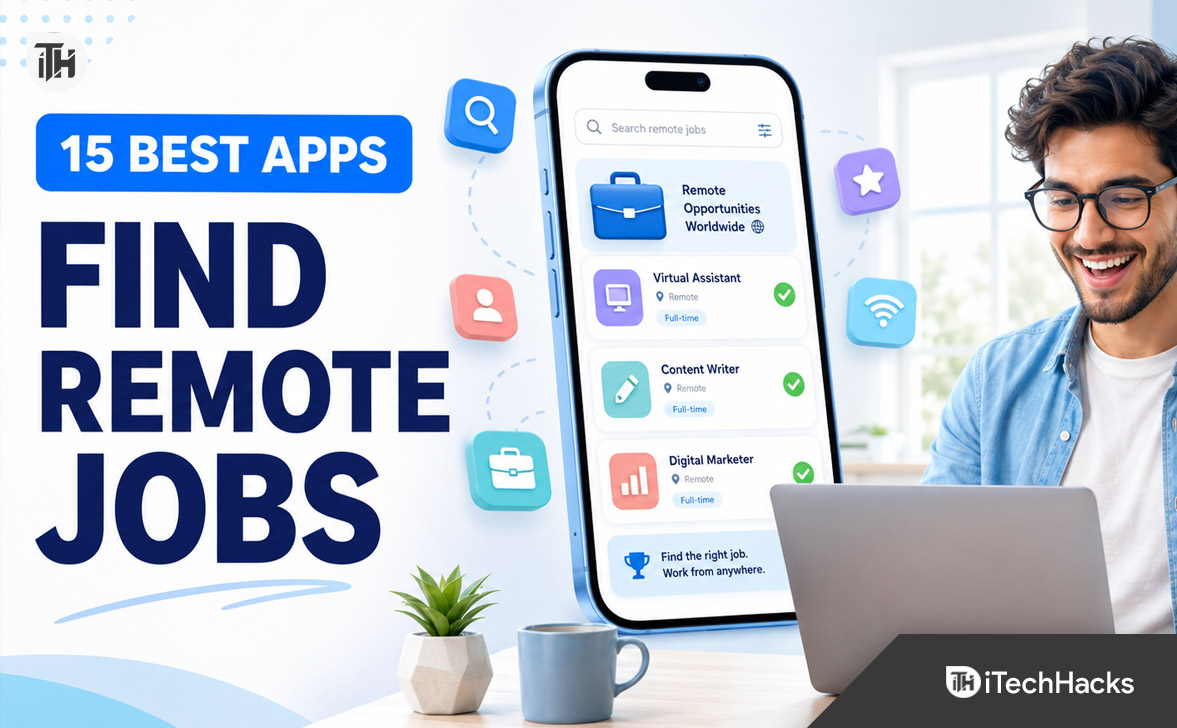
Below are 15 reliable remote job apps and platforms worth exploring in 2026. We have also included practical tips for avoiding scams, improving your applications, and finding jobs that you are legally eligible to perform from your location.
What Are Work-From-Home Job Apps?
Work-from-home job apps are platforms that connect employers with people looking for jobs that can be performed remotely. These platforms may provide full-time employment, part-time work, freelance contracts, internships, or short-term projects.
Some services, such as LinkedIn and Indeed, cover almost every type of employment. Others, including FlexJobs, Remote.co, and Working Nomads, concentrate primarily on remote and flexible positions. Freelance marketplaces like Upwork and Fiverr operate differently because workers usually provide services as independent contractors rather than employees.
Keep in mind that “remote” does not always mean “work from anywhere.” A company may allow employees to work from home while requiring them to live in a particular country, state, province, or time zone. Always examine the location requirements before applying.
15 Best Apps to Find Work-From-Home Jobs
1. LinkedIn
LinkedIn is one of the best apps for finding professional work-from-home jobs while building connections with recruiters and hiring managers. It covers industries such as technology, marketing, finance, human resources, customer success, healthcare, design, and sales.
Enter your desired role in LinkedIn Jobs and select Remote under the location or workplace filter. You can also filter results by experience level, employment type, date posted, company, and salary information when available.
LinkedIn is particularly useful because your profile acts as a public professional résumé. Recruiters can discover you through your job title, skills, experience, recommendations, and activity.
- Best for: Professional, corporate, and management positions
- Major advantage: Jobs, networking, and recruiter outreach in one place
- Potential drawback: Popular remote listings can receive many applications
Complete your profile before applying. Use a descriptive headline, add measurable accomplishments, and enable job alerts for several related job titles instead of relying on one broad search.
2. Indeed
Indeed is a large employment search platform with listings from direct employers, recruiters, and company career pages. It is suitable for both experienced professionals and beginners looking for customer service, administrative support, sales, data entry, accounting, writing, or technical jobs.
Search for your occupation and use the remote-work filter. You can narrow results by salary, job type, experience level, company, and posting date. Indeed also lets job seekers upload a résumé and create email notifications for new opportunities.
Because Indeed gathers listings from numerous sources, you may occasionally encounter an expired, duplicated, or incorrectly categorized position. Confirm important details on the employer’s official careers page before sharing information or attending an interview.
- Best for: A broad search across industries and experience levels
- Major advantage: Large number of listings and helpful filters
- Potential drawback: Listing quality and freshness can vary
3. FlexJobs
FlexJobs specializes in remote, hybrid, part-time, freelance, and flexible employment. Unlike many free job boards, it promotes a curated approach and screens listings before publishing them. This can reduce the amount of obvious spam and misleading advertising job seekers must review.
The platform covers more than technical work. Users can search categories such as education, project management, writing, customer service, accounting, healthcare, legal services, and operations.
FlexJobs generally requires a paid subscription for complete access to its job-search features. That makes it most appropriate for people actively searching and willing to pay for a more organized selection of opportunities.
- Best for: Curated remote and flexible job listings
- Major advantage: Screened opportunities across many career categories
- Potential drawback: Full access is not completely free
A screened listing still does not guarantee employment or eliminate every risk. Research the company, employment arrangement, and compensation before accepting an offer.
4. Glassdoor
Glassdoor combines job listings with employee reviews, workplace discussions, company ratings, interview reports, and salary information. These additional details can help you evaluate an unfamiliar remote employer before applying.
Use its job search to select remote positions, then examine recent reviews from employees in departments similar to yours. Pay attention to repeated comments about management, workloads, career development, communication, and remote-working policies.
Do not treat one extremely positive or negative review as conclusive. Reviews represent individual experiences, and working conditions can differ substantially between departments and managers.
- Best for: Researching employers, salaries, and interview experiences
- Major advantage: Company insights alongside job listings
- Potential drawback: Some reviews may be old or highly subjective
5. ZipRecruiter
ZipRecruiter is a general job-search app that offers personalized matches, saved searches, alerts, and streamlined applications. Its remote listings include customer support, insurance, sales, healthcare, administration, accounting, technology, and other fields.
The service can notify candidates when employers interact with their applications, although the information available depends on how a company uses the platform. Its mobile app is convenient for reviewing alerts and applying when a suitable position appears.
Precise searches usually produce better results than generic phrases such as “online job.” Try combinations such as “remote claims specialist,” “work-from-home customer support,” or “remote WordPress developer.”
- Best for: Fast searching and personalized job alerts
- Major advantage: Convenient mobile application process
- Potential drawback: Some searches may contain repetitive or broadly matched results
6. Remote.co
Remote.co is built around remote employment and flexible careers. It organizes opportunities into categories such as accounting, customer service, data entry, healthcare, design, recruiting, teaching, marketing, writing, and software development.
The focused format makes it easier to avoid sorting through large numbers of office-based positions. The platform also publishes practical resources about remote interviews, virtual collaboration, career development, and working from home.
Read the geographic label on every listing. Some positions are open internationally, while others require applicants to live in the United States or another specified region.
- Best for: Browsing remote-specific career categories
- Major advantage: Focused selection without excessive office-only results
- Potential drawback: Fewer total listings than major general job boards
7. We Work Remotely
We Work Remotely is a dedicated remote job board commonly used by distributed companies. It is particularly strong in software development, design, product management, sales, marketing, customer support, and business operations.
Many listings clearly identify whether an employer is hiring globally or only within certain regions. This information can save applicants time, but the complete description must still be reviewed for working-hour, tax-residency, and employment-authorization requirements.
You generally do not need an elaborate profile to browse opportunities. Applications are frequently completed through the hiring company’s website or applicant-tracking system.
- Best for: Established remote companies and technology-related roles
- Major advantage: Remote-first job selection and global opportunities
- Potential drawback: Competition can be intense for popular jobs
8. Upwork
Upwork is a freelance marketplace where clients post projects and independent professionals submit proposals. Categories include web development, virtual assistance, marketing, writing, design, accounting, consulting, data analysis, engineering, and customer support.
It is better suited to freelance contracts than conventional salaried employment, although some assignments can develop into long-term working relationships or contract-to-hire arrangements. The platform provides work history, client reviews, contracts, time tracking, and payment features.
New freelancers often struggle because they apply to broad projects with generic proposals. Start with assignments that match a specific skill, explain exactly how you will complete the work, and show relevant examples.
- Best for: Freelancers seeking short-term or ongoing client work
- Major advantage: Large variety of professional project categories
- Potential drawback: Platform fees, proposal costs, and strong competition
Keep communication and payments within the platform when required. Be cautious if a client immediately requests contact through an unverified messaging service or asks you to purchase equipment using a check.
9. Fiverr
Fiverr takes a service-based approach to remote freelance work. Instead of applying to every opening, sellers can create predefined services, commonly called gigs, describing what they will deliver, the turnaround time, and the price.
The platform works well for logo design, WordPress support, video editing, voice-over work, translation, SEO services, social media content, writing, programming, and other deliverable-based services.
Successful gigs usually target a clear customer problem. “I will fix WordPress Core Web Vitals issues” is more specific and persuasive than “I will do web development.” Use original portfolio samples and set realistic delivery times.
- Best for: Selling clearly packaged freelance services
- Major advantage: Clients can discover and order your service
- Potential drawback: Building visibility and reviews can take time
10. Wellfound
Wellfound, previously known as AngelList Talent, focuses on jobs at startups and growing technology companies. Candidates can find remote opportunities in engineering, product management, design, operations, sales, marketing, finance, and customer success.
A major benefit is that many listings provide useful information about the startup, role, salary range, and potential equity. Its profile-based application process can also make direct communication with startup hiring teams more convenient.
Startups can offer rapid learning and meaningful responsibility, but they may also have changing priorities and fewer established processes. During interviews, ask about funding, runway, team size, reporting structure, working hours, and expectations for the first 90 days.
- Best for: Remote startup and technology careers
- Major advantage: Startup-focused information and direct applications
- Potential drawback: Some positions involve greater uncertainty than established-company roles
11. Handshake
Handshake is designed primarily for college students, recent graduates, and early-career candidates. Participating educational institutions may give students access to internships, career fairs, employer events, campus recruiting, and personalized opportunities.
Users can search for remote internships and entry-level jobs in areas such as marketing, finance, engineering, customer service, research, nonprofit work, and business operations. It is particularly valuable for applicants who have limited professional experience but relevant education, coursework, or campus activities.
Create a complete profile that includes projects, certifications, volunteer work, and technical skills. If your college or university participates, also use its career center for résumé feedback and interview preparation.
- Best for: Students, graduates, and entry-level applicants
- Major advantage: Campus recruiting and early-career opportunities
- Potential drawback: Access and features can depend on your institution
12. Working Nomads
Working Nomads curates fully remote opportunities for professionals who want location flexibility. It lists full-time, part-time, and contract roles in development, marketing, design, management, sales, education, writing, administration, and other categories.
Users can browse jobs directly and create alerts based on their interests. The focused interface is helpful for experienced professionals who want fewer irrelevant office-based results.
The phrase “digital nomad” does not mean every job can be performed from every country. Employers may restrict hiring because of payroll, taxation, security, licensing, or time-zone requirements.
- Best for: Professionals looking for fully remote positions
- Major advantage: Curated remote listings and category-based alerts
- Potential drawback: Geographic restrictions still apply to many positions
13. Jobspresso
Jobspresso is another remote-focused job platform featuring opportunities from companies that support distributed work. Common categories include software engineering, marketing, customer service, product management, design, sales, and operations.
It is useful as a secondary source alongside larger platforms because smaller remote job boards may surface opportunities that do not appear prominently in general searches. You can browse by job category and follow the employer’s application instructions.
Review the original posting date before applying. If a vacancy has been open for a long time, check the company’s careers page to verify that applications are still being accepted.
- Best for: Curated professional remote opportunities
- Major advantage: Simple, remote-specific browsing
- Potential drawback: Smaller selection compared with LinkedIn or Indeed
14. NoDesk
NoDesk offers remote job listings as well as resources about distributed companies and remote-working careers. It is especially helpful for finding positions at remote-first technology companies and startups.
Job seekers can browse roles without navigating through a large number of local or office-only listings. Opportunities commonly cover software, data, marketing, design, sales, customer support, and operations.
NoDesk may not offer the same application-management features as the largest employment apps, but its focused selection makes it a useful addition to a wider remote job search.
- Best for: Discovering remote-first companies
- Major advantage: Focused listings with straightforward browsing
- Potential drawback: Limited volume in some occupations
15. Freelancer
Freelancer is a project marketplace where users bid on remote assignments or participate in contests. Available work may include programming, data entry, content writing, design, engineering, translation, marketing, and administrative services.
The platform can help freelancers reach international clients, but careful project selection is essential. Examine the client’s payment verification, previous reviews, project history, requirements, budget, and communication before accepting work.
Avoid submitting extremely low bids simply to win your first project. Calculate the time, platform charges, revision requests, and complexity before deciding whether a project is worthwhile.
- Best for: Freelance projects across technical and creative categories
- Major advantage: Access to clients and projects from multiple countries
- Potential drawback: Competitive bidding and inconsistent project quality
How to Choose the Best Work-From-Home Job App
Using all 15 platforms every day is unnecessary and can make your search difficult to manage. Select two or three primary platforms based on the type of work you want.
- For permanent professional jobs: Start with LinkedIn, Indeed, and FlexJobs.
- For company research: Use Glassdoor before interviews or accepting offers.
- For startup careers: Try Wellfound and NoDesk.
- For remote-only listings: Check Remote.co, We Work Remotely, Working Nomads, and Jobspresso.
- For freelance projects: Use Upwork, Fiverr, or Freelancer.
- For students and recent graduates: Begin with Handshake.
Set alerts on your primary apps and review secondary boards several times per week. Applying soon after a relevant job is published can help, but application quality remains more important than submitting hundreds of generic résumés.
How to Find a Legitimate Work-From-Home Job
Use Specific Job Titles
A search for “work from home” may return unrelated or low-quality results. Search for the occupation first, then enable the remote filter. Examples include “remote SEO specialist,” “remote customer success manager,” or “remote accounts payable clerk.”
Create alerts for variations of the same occupation because employers may use different titles. A customer service role could also be advertised as customer support representative, customer care associate, or client services specialist.
Customize Your Résumé
Study the job description and identify the skills the employer repeatedly emphasizes. Reflect relevant skills naturally in your résumé, but never claim experience you do not possess.
Show measurable results where possible. For example, “managed email support” is weaker than “resolved an average of 45 customer tickets per day while maintaining a 94 percent satisfaction score.”
Demonstrate Remote-Working Skills
Employers want evidence that you can work independently and communicate effectively without constant supervision. Mention experience with project-management tools, video meetings, written reporting, documentation, asynchronous communication, and deadline management when relevant.
If you have never held a formal remote job, use examples from freelance work, online courses, independent projects, volunteer assignments, or collaboration across different locations.
Confirm Location Eligibility
Read the location section carefully before applying. “Remote in the United States” usually means the employer cannot hire someone living outside the country. Even within one country, an employer may limit recruitment to specific states because of employment regulations and payroll requirements.
Also check time-zone expectations. A worldwide remote position may still require several hours of overlap with a team located in North America or Europe.
Verify the Employer Independently
Visit the organization’s official website and look for the same opening on its careers page. Check whether the recruiter’s email domain matches the company’s real domain and whether the recruiter has a credible professional history.
If you found the position through an aggregator, applying through the verified company website may help you avoid expired or copied listings.
Common Work-From-Home Job Scams to Avoid
Remote job seekers are frequent targets for identity theft, fake-check schemes, reshipping operations, and advance-fee fraud. A familiar company name or professional-looking offer does not automatically make a listing legitimate.
- Do not pay an employer to receive a job, interview, starter kit, or mandatory training.
- Never deposit a check and send part of the money to an equipment supplier.
- Be suspicious of interviews conducted entirely through text messages on an unfamiliar app.
- Do not provide banking credentials, one-time passwords, or complete identity documents before verifying the employer.
- Avoid jobs asking you to receive, inspect, and reship packages from your home.
- Question unusually high pay for simple data entry, typing, or product-review tasks.
- Check the spelling of email domains because scammers often imitate legitimate companies with a small variation.
Legitimate employers may request tax, banking, and identity information after you have accepted a verified offer through a secure onboarding system. The timing, method, and identity of the requesting company are critical.
Tips to Improve Your Chances of Getting Hired Remotely
- Apply selectively: Concentrate on positions where you meet most important requirements.
- Create a simple portfolio: Show writing samples, designs, campaigns, code, reports, or relevant case studies.
- Update your profiles: Make sure dates, job titles, skills, and contact information are consistent.
- Set multiple alerts: Use related job titles and carefully selected keywords.
- Track every application: Record the company, role, date, source, status, and follow-up date.
- Prepare for video interviews: Test your microphone, camera, internet connection, and background in advance.
- Research compensation: Compare salaries using your occupation, experience, and hiring location.
- Follow instructions: Remote employers often evaluate written communication and attention to detail from the first application.
Avoid using the exact same résumé and introduction for every vacancy. A focused application showing how your experience solves the employer’s particular problem is more convincing than a generic application sent to dozens of companies.
Frequently Asked Questions
Which app is best for finding work-from-home jobs?
LinkedIn and Indeed are strong starting points because they cover numerous industries and employment levels. FlexJobs may suit people who want curated remote listings, while We Work Remotely and Remote.co are useful for remote-specific searches. Upwork and Fiverr are better for freelance services than conventional employment.
Which work-from-home job apps are free?
LinkedIn, Indeed, Glassdoor, Wellfound, Handshake, Remote.co, We Work Remotely, and several other platforms allow people to browse or apply for many jobs without purchasing a standard subscription. Optional premium features may be available. Freelance platforms may charge service fees or fees related to bidding, withdrawals, advertising, or additional features.
Can I find work-from-home jobs without experience?
Yes, but focus on genuine entry-level positions, internships, apprenticeships, and roles that value transferable skills. Customer support, appointment scheduling, sales development, content moderation, and virtual assistance may offer entry-level opportunities, although requirements vary considerably.
Can I get a remote job in another country?
Possibly, but the employer must be able and willing to engage workers in your country. Some companies hire international employees through local entities or employer-of-record services, while others engage independent contractors. Check location, work authorization, taxation, payment, and time-zone conditions before applying.
Are data-entry work-from-home jobs legitimate?
Legitimate remote data-entry and administrative positions exist, but this category attracts many scams. Verify the employer, compare the pay with realistic market rates, and avoid offers requiring upfront payments, check deposits, cryptocurrency transfers, or communication only through private messaging apps.
How many remote jobs should I apply for each day?
There is no universal number. Five carefully selected and customized applications will often be more productive than dozens of rushed submissions. Track your results and improve your résumé or targeting if you receive no interview invitations after consistently applying to suitable roles.
Do I need a laptop to work from home?
Most professional remote jobs require a reliable computer, stable internet connection, and a quiet working environment. Some employers supply equipment after hiring. Be cautious if a supposed employer sends a check and instructs you to purchase equipment from a particular vendor.
Final Thoughts
The best apps to find work-from-home jobs include LinkedIn, Indeed, FlexJobs, Glassdoor, Remote.co, We Work Remotely, Upwork, Fiverr, Wellfound, and several specialized remote job boards. Each platform serves a different purpose, so choose tools that match your career stage and preferred employment arrangement.
Use precise searches, enable job alerts, verify every employer, and customize your application for the position. Most importantly, remember that remote describes where the work is performed, not where the employer is permitted to hire. Checking geographic and time-zone restrictions early will prevent wasted applications.
A successful remote job search depends on consistency, careful research, and strong positioning. With a complete professional profile, evidence of your skills, and a focused selection of trustworthy platforms, you can identify legitimate opportunities without relying on questionable advertisements or unrealistic promises.